Who is a Pengkaji Teknis, and Why Their Role is Important
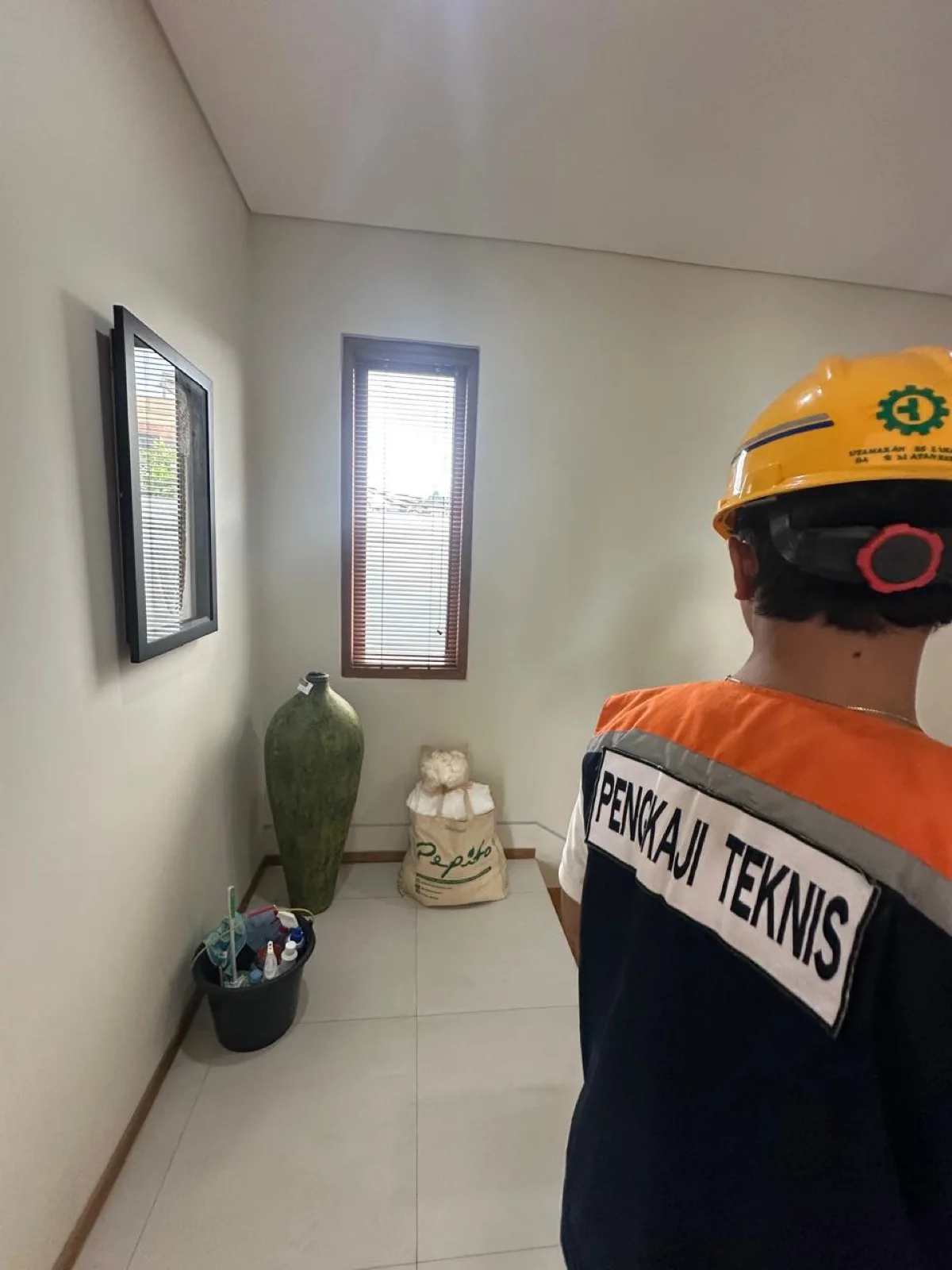
Pengkaji Teknis is not a formality. They inspect the functional suitability of the building and are responsible for the SLF technical recommendations.
SLF is not just a government agency matter
When owners hear the word SLF, what often comes to mind is a certificate from the local government. That is true, but before the certificate is issued, there is technical work that is highly decisive: the functional suitability inspection. This is where the Pengkaji Teknis comes in.
Pengkaji Teknis is the party that inspects whether a building is suitable for use. They do not just look at the building's exterior. They evaluate evidence, field conditions, safety systems, utilities, accessibility, and the conformity of documents with the building that actually stands.
Duties of a Pengkaji Teknis according to PP 16/2021
PP 16/2021 Pasal 205 paragraph (1) outlines the duties of a Pengkaji Teknis: to conduct functional suitability inspections of buildings and/or periodic inspections. The same Pasal also connects this duty to the SLF requirements for existing buildings, SLF extensions, post-disaster inspections, and periodic inspections.
In other words, a Pengkaji Teknis is a bridge between the physical building and the administrative decision. The government agency can issue the document when there is a strong technical basis. If the technical report is weak, incomplete, or fails to address the required standards, the SIMBG process can easily stall.
Who can become a Pengkaji Teknis
PP 16/2021 distinguishes between individual Pengkaji Teknis and business entities. For individuals, the scope is limited to low-risk, simple technology, and low-cost buildings, subject to educational qualifications and work competency certificates. For more complex buildings, business entities with SBU and certified experts become more relevant.
Pasal 207 regulates the requirements for business entities, including experience and SKK-certified experts in the required fields. Since SLF assesses many aspects, architectural competence alone is not enough. Structure, mechanical-electrical, outdoor layout, fire protection, and building infrastructure must be evaluated collectively.
Fieldwork of a Pengkaji Teknis
In the field, inspections can start from visual observation, dimensional measurement, photo documentation, evacuation route checks, and utility verification. For certain buildings, PP 16/2021 Pasal 205 paragraph (5) allows for physical inspections using visual methods, non-destructive testing, and destructive testing if necessary.
Examples that owners commonly understand include testing lighting with a lux meter, noise levels with a sound level meter, air quality, humidity, or examining structural elements. Tools are not used to look complicated; they are used so that technical decisions are not based on feeling alone.
The responsibility is not a formality
PP 16/2021 Pasal 204 paragraph (5) states that the Pengkaji Teknis is responsible for the results of the technical assessment in the recommendation document in accordance with the work contract. This is important. A technical signature is not a decoration, but a professional responsibility.
Therefore, choosing an SLF consultant should not be based solely on who can 'fast-track' the process. A better question is: who can accurately assess your building's technical risks, compile accountable documents, and explain the consequences clearly?
Practical notes for building owners
In the case of existing buildings, the role of the Pengkaji Teknis is most felt when old documents no longer reflect field conditions. Owners often bring old drawings, building photos, or partially missing permit documents. The Pengkaji Teknis helps transform initially vague conditions into a list of findings: which ones only need to be redrawn, which ones need additional evidence, and which ones require technical recommendations before being submitted to SIMBG.
The most practical way to use this article is to separate two things from the very beginning: document status and physical status of the building. Document status answers whether the PBG/IMB/SLF ever existed. Physical status answers whether the structure, access, utilities, fire protection, and comfort of the building are still fit to be assessed. If these two things are mixed up, the process often feels like mere administration. Yet for SLF, administrative documents are only strong if supported by technical inspections.
Secure consultation
Check the building's position before making a decision
Start with the document status you know: location, building function, PBG/IMB/SLF if any, and current usage conditions. Sensitive data only needs to be discussed after the document requirements are clear.