Checklist of the 4 Pillars of Building Worthiness for SLF
SLF assesses four pillars: safety, health, comfort, and convenience. These are what are typically inspected on-site.
SLF is a physical inspection, not a paperwork formality
In many initial conversations, owners assume SLF is merely about completing documents. In reality, the core of SLF is proving that a building is fit for use. That proof is established through the four pillars of reliability: safety, health, comfort, and convenience.
These four pillars are not slogans. PP 16/2021 details the technical requirements across several articles. In the field, those pillars are translated into checklists, measurements, documentation, and recommendations for corrective action when deficiencies are found.
Safety: structure, fire, lightning, electricity
The safety pillar covers the structure's load-bearing capacity, fire hazard protection, lightning protection, electrical installations, and evacuation routes. PP 16/2021 Article 220 positions the inspection of these elements as a critical part of functional worthiness.
For certain buildings, structural inspection may require non-destructive testing methods such as a hammer test or other examination as needed. For villas and commercial buildings, exit routes, stair areas, assembly points, fire extinguishers, electrical panels, and evacuation access are items that cannot be overlooked.
Health: air, light, water, waste
The health pillar concerns ventilation, lighting, clean water systems, wastewater, building materials, and indoor environmental quality. PP 16/2021 Articles 221–225 provide the basis for inspecting these aspects.
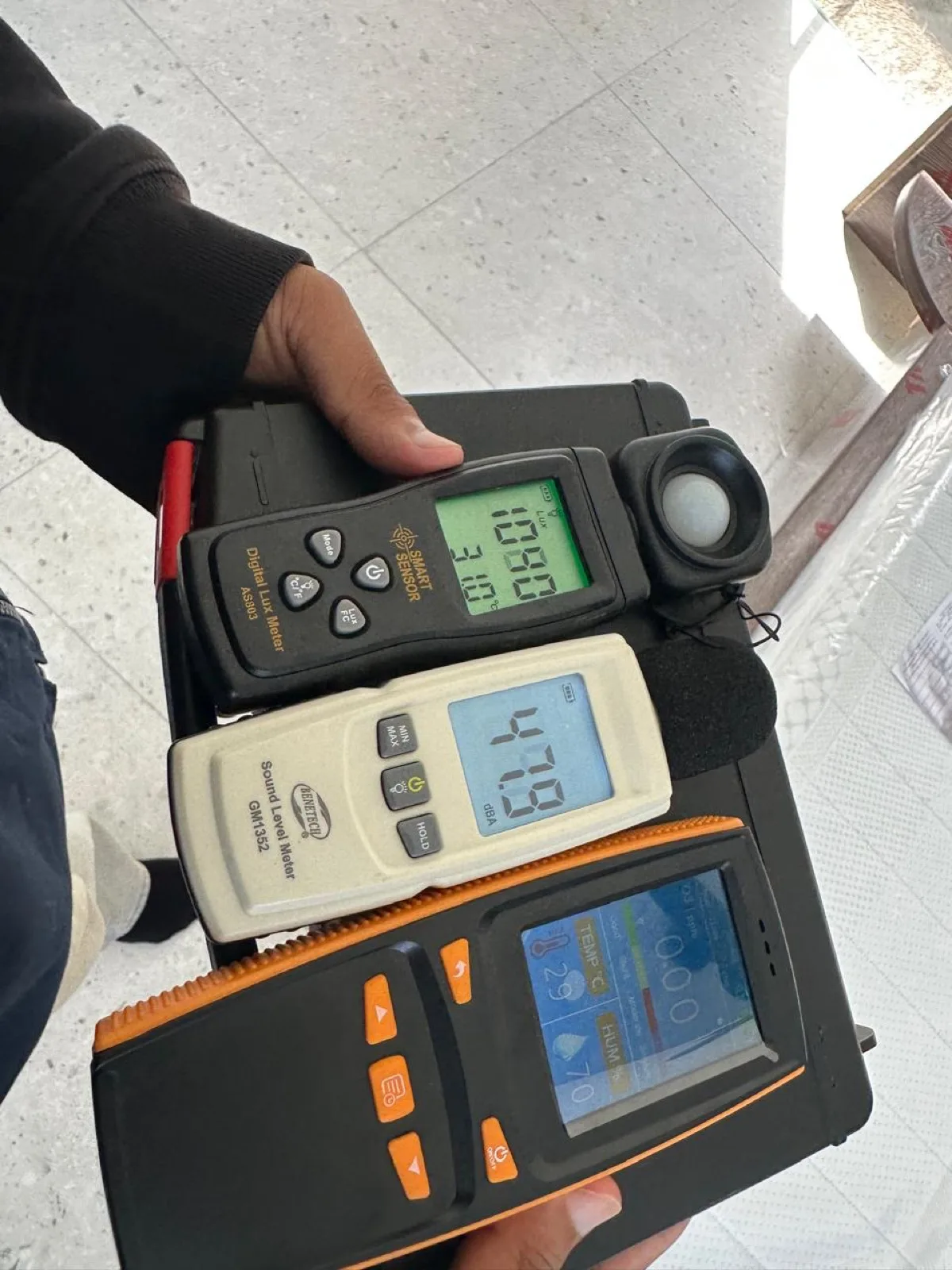
On-site, inspections may use tools such as a lux meter for lighting, air quality measurement devices, humidity measurement, or sanitation system checks. In kitchens, bathrooms, enclosed areas, and public spaces, air quality and lighting can be real issues, not just checklist items.
Comfort: circulation space, temperature, views, noise
Comfort is often considered subjective, but in SLF it still has technical aspects. Article 226 links comfort to circulation space, air conditions, views, vibration, and noise. For commercial buildings, comfort directly impacts user experience and operational safety.
A sound level meter can be used to measure noise, especially when a building is near a main road, generator, service area, or dense environment. Ventilation and temperature also affect spaces used by guests or workers every day.
Convenience: accessibility and infrastructure
The convenience pillar relates to access to, from, and within the building. Article 227 covers horizontal and vertical access, ramps, stairs, elevators if present, toilets, parking, lactation rooms, and other infrastructure appropriate to the building's function and scale.
Not all small buildings require the same elements as large buildings. But the principle remains: a building must be usable safely and properly by its occupants. For commercial buildings, the accessibility aspect becomes increasingly important because the building is used by the public, not just by family members.
The checklist helps owners identify risks early
The greatest benefit of the checklist is not merely obtaining SLF approval. The checklist helps owners identify weak points in the building before they become problems. Sometimes the needed fixes are simple: adding a fire extinguisher, clarifying evacuation routes, improving ventilation, or tidying up the electrical panel.
When the inspection is carried out properly, owners no longer have to guess. You will know which parts are safe, which parts need repair, and what documents must be prepared. That is the real value of a technical assessment.
Practical notes for building owners
The four pillars of building suitability are easier to understand when read as the experience of the building user. Safety answers whether people can be inside the building without structural risks or uncontrolled fire. Health looks at air, light, sanitation, and basic utilities. Comfort touches on space quality, noise, temperature, and daily usage. Convenience relates to access, circulation, evacuation, and usage by various user groups.
This checklist is not a substitute for a technical audit, but it is useful for assessing initial risks before a survey. Owners can walk from the front area, main room, bedrooms, kitchen, stairs, electrical panel, service area, to the exit path, and record simple findings. Photos of these findings help consultants understand priorities during the initial consultation. If any point appears critical, the next decision should be made based on inspection, not guesswork.
Secure consultation
Check the building's position before making a decision
Start with the document status you know: location, building function, PBG/IMB/SLF if any, and current usage conditions. Sensitive data only needs to be discussed after the document requirements are clear.