Tri Angga & the 15-Meter Height Limit in Bali
Building design in Bali follows the Tri Angga philosophy, and the 15-meter height limit applies across Bali through the Provincial RTRWP Regulation. This is what determines PBG approval.
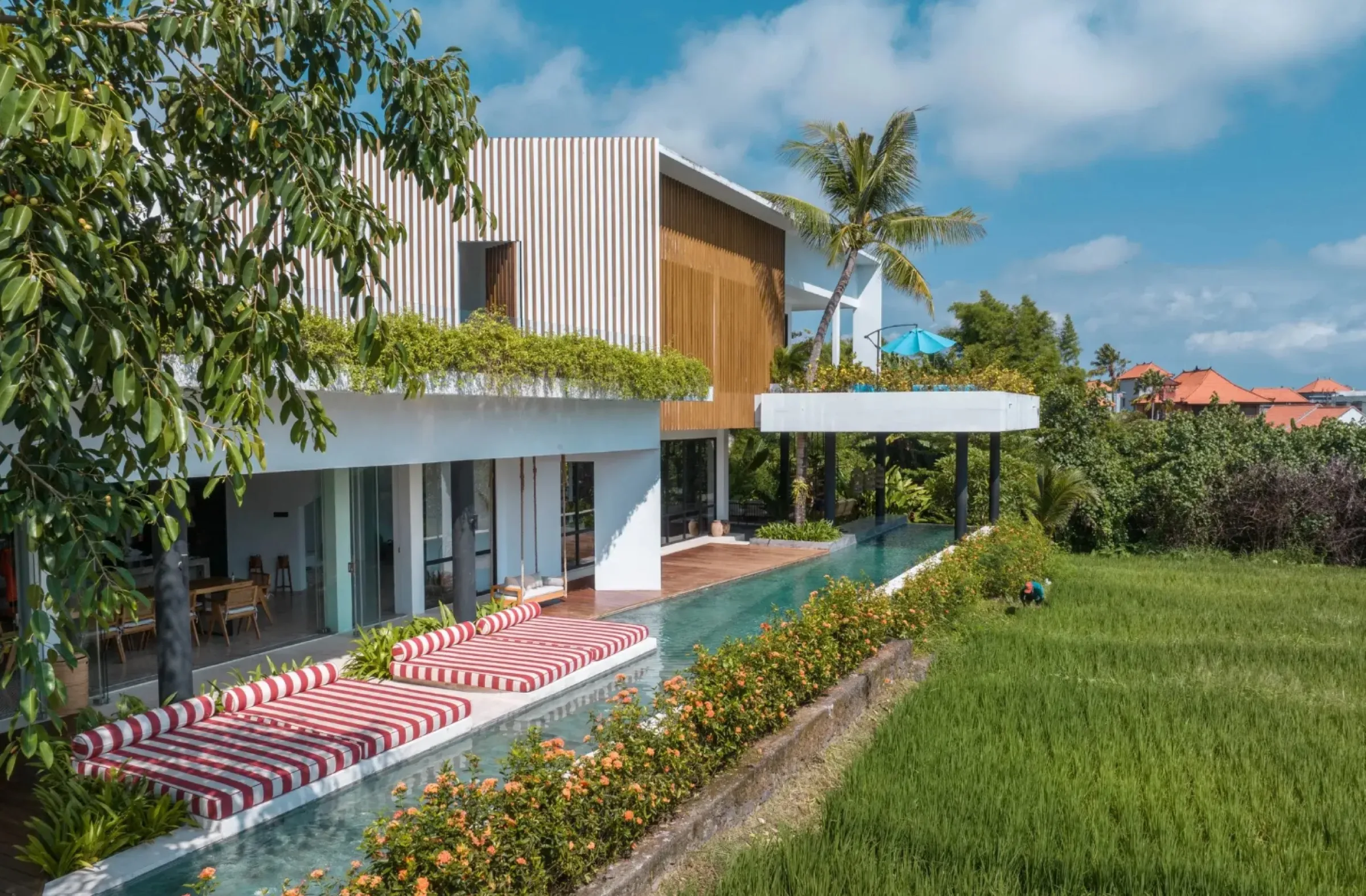
PBG in Bali assesses more than structure
Applying for a PBG in Bali tests not just structural integrity, but also compliance with local architectural character. Bali Provincial Regulation 5/2005 requires every building, including modern non-traditional structures, to display traditional Balinese architectural style and features that harmonize with the surroundings (Article 7 paragraph (2) and Article 13 paragraph (1)).
This regulation also recognizes Asta Kosala Kosali as a traditional architectural norm and outlines visual guidelines such as Tri Mandala in its appendices. So a minimalist-designed villa or hotel must still respect these principles — not merely by attaching Balinese ornaments to the facade.
Tri Angga: head, body, feet
One of the core principles is Tri Angga, which divides a building into three parts: the head (roof), the body (walls and spaces), and the feet (foundation and base). This principle is illustrated in the appendix of Bali Regulation 5/2005 as a design proportion guideline, and is adopted in greater detail at the city level.
For the roof element, the technical rule most often referenced comes from Denpasar Mayor Regulation 25/2010 Article 8 paragraph (2): the roof must be of a saddle or hip shape with a slope of at least 25 degrees and at most 50 degrees, while flat roof combinations are limited to a maximum of 20% of the building's facade. Note that these roof specifications apply specifically to Denpasar City. For Badung (Canggu) and Gianyar, these figures serve as a comparative reference, but local architectural requirements must be verified against each regency's own regional regulation/mayor regulation/spatial plan.
Where the 15-meter height limit comes from
The building height limit is one of the most well-known regulations in Bali. What is often mistaken is its source. The maximum building height of 15 meters applies across Bali under Bali Provincial Regulation 2/2023 on the Bali RTRWP, Article 100 paragraph (2) — not a specific city regulation.
In practical terms, 15 meters is roughly equivalent to three to four standard floors. Consequently, property development in Bali is generally directed horizontally, with attention to building coverage ratios and open space, rather than rising vertically. Investors bringing high-rise designs from outside Bali are often caught off guard by this limit.
Local rules determine permit smoothness
These architectural and spatial planning provisions are not merely aesthetic suggestions. Designs that fail to adopt Tri Angga proportions or exceed the height limit risk being asked for revisions during technical evaluation, before the PBG is issued. The building intensity and land-use provisions themselves are set out in the Site Plan Statement (KRK), which originates from the regional RDTR (PP 16/2021 Article 1 point 10).
For owners of existing buildings looking to formalize their legal status, understanding these rules remains important because the as-built drawings will be measured against the same standards. Aligning modern design with Balinese architectural law from the outset is far more cost-effective than making corrections after the building is already standing.
Frequently asked questions
Brief FAQ from this article
Does the 15-meter height limit apply to all of Bali?
Yes. The maximum height limit of 15 meters applies across Bali under Bali Provincial Regulation 2/2023 (RTRWP) Article 100 paragraph (2), not just a single city regulation.
Does the 25–50 degree roof slope rule apply in Badung?
That figure comes from Denpasar Mayor Regulation 25/2010 and applies to Denpasar City. For Badung and Gianyar, use it as a reference and verify the local architectural regulations of the respective regency.
Secure consultation
Check the building's position before making a decision
Start with the document status you know: location, building function, PBG/IMB/SLF if any, and current usage conditions. Sensitive data only needs to be discussed after the document requirements are clear.